5 Tips For Your First Gig
5 Tips For Your First Gig
Your first gig is not the show where you figure out if you're good enough. It's the show where you figure out what actually matters once real people are in the room. A lot of what you've practiced doesn't translate to a wine bar on a Tuesday night. Here's what does.
1. Bring The Right Gear, And Nothing More
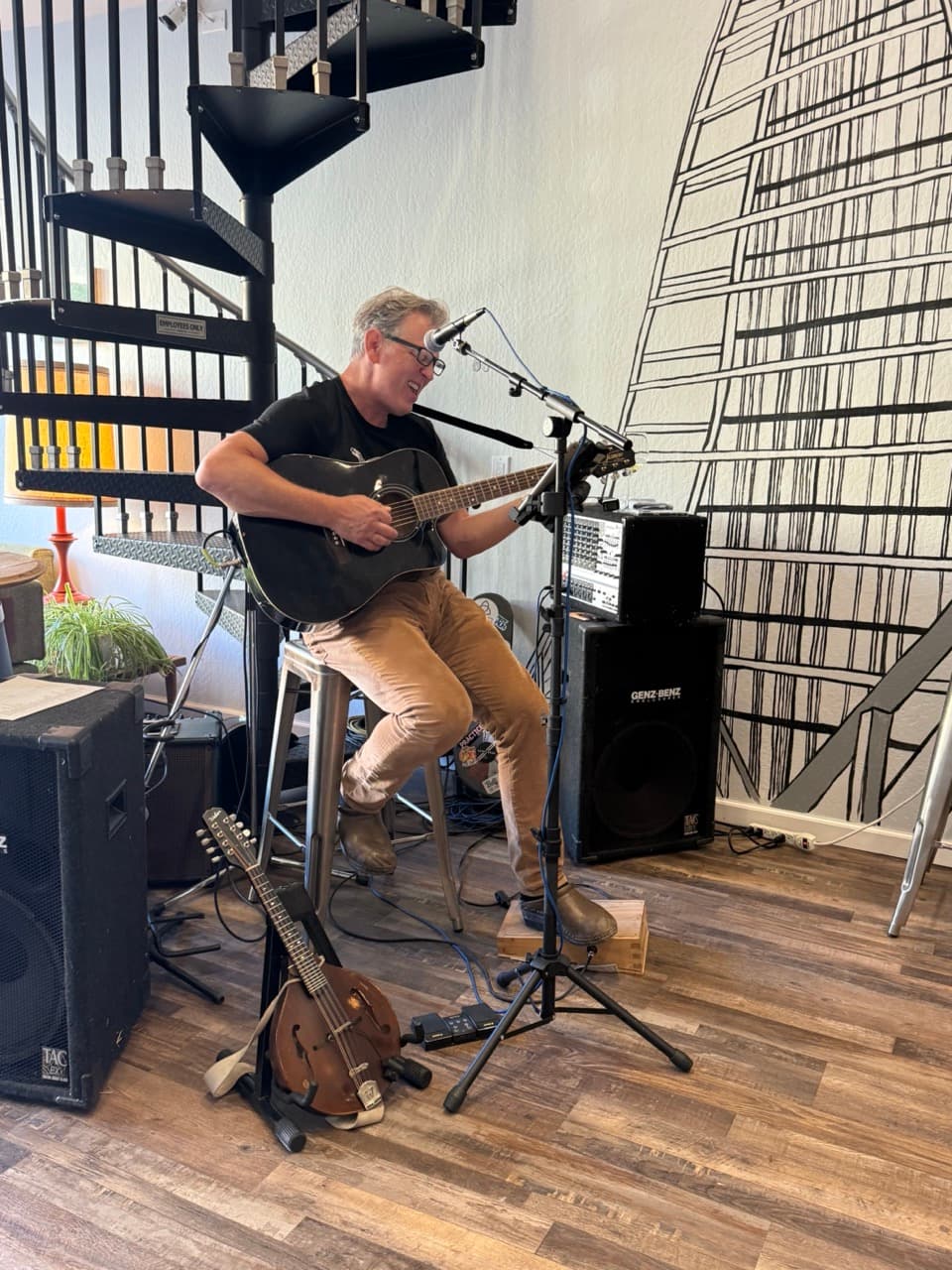
Small rooms don't need a full production. A wine bar, a coffee shop, most listening rooms, they're built for intimacy, not volume. Show up with too much gear and you'll spend your load in time fighting cable clutter instead of settling into the space.
For most solo or duo gigs at this size, you're looking at:
- A compact PA or a single powered speaker, something in the 8 to 12 inch range that can handle vocals and an acoustic instrument without straining. My solo small room rig is an amp that accommodates my instrument and has a vocal mic input.
- A basic mixer, even a 4 channel one gets you room to add a vocal mic and an instrument input.
- Two mics minimum: one for vocals, one for your instrument or a DI box if you're playing electric
- A mic stand and cables, and bring extras, XLR cables die at the worst possible moment
- A tuner and extra strings or reeds or whatever your instrument specific backup is
- Some kind of light, even a small clip light, if the venue's stage area runs dark
Ask the venue ahead of time what they already have. A lot of coffee shops have a house PA sitting in a closet that nobody's touched since the last open mic. Don't show up with a truck's worth of gear for a room that seats forty people. Match your setup to the size of the space, and you'll spend more energy on the music and less on the tech.
2. Know Your Math: How Many Songs Fill A Two Hour Set
This trips up more new artists than anything else on this list. A two hour gig does not mean two hours of continuous singing. Factor in breaks, banter, tuning, and the natural pacing of a live room, and you're realistically looking at 30 to 40 songs across two sets, sometimes broken into three if the venue asks for it.
Here's a rough breakdown that works for most bar or cafe settings:
- Average song length: 3.5 to 4.5 minutes
- Two 45 minute sets with a 15 to 20 minute break is a common structure for a two hour booking (my small group often will not break, more on this later)
- 45 minutes of music at roughly 4 minutes a song lands you around 11 to 13 songs per set
- That's 22 to 26 songs total, plus a handful of extras in your back pocket in case the room wants more or a request throws off your plan
Always overprepare. Walk in with 35 to 40 songs ready even if you only need 25. You want options if the crowd's energy calls for something different than what you had planned, and you never want to be scrambling to remember a bridge halfway through your second set because you didn't expect to need it.
3. Your First Song And Your Last Song Are Doing More Work Than You Think
Every song in your set matters, but two of them are doing a specific job. The opener sets the tone for how the room perceives you before they've made up their mind about anything else. The closer is what they remember walking out the door.
For your opener, pick something confident and immediately recognizable, whether that's your strongest original or a cover people know within the first four bars. This is not the moment to open with your most obscure, artistically ambitious piece. You're not trying to impress a room that isn't listening yet. You're trying to earn its attention. A song people can settle into within seconds does that better than a song that asks them to work for it.
Your closer works differently. This is where you can take a chance, land on something emotional, or go big with your most requested or highest energy piece, because by now you've earned the room's trust and their attention. People remember endings more than they remember middles. A strong close is often the difference between polite applause and someone coming up afterward asking when you're playing again. We like to end a set with another BIG cover. Wow them a little…
Between those two points, you have room to breathe, to try new material, to take the set somewhere. But bookend it right.
4. Originals And Covers Both Have A Job To Do
New artists often treat this like a philosophical debate. It's not. It's a practical tool.
Covers earn you trust fast. When you play something familiar, whether it's a well loved standard or a current radio song, you're giving the room an easy way in. People relax when they recognize a song. It tells them you understand the room you're playing in and that you respect what the audience already loves, not just what you want to perform. In a wine bar or coffee shop setting, where most people didn't come specifically to see you, familiar songs are what keep them in their seats and keep the room comfortable.
Originals are how you get remembered. A great original, especially one placed thoughtfully inside a set of familiar material, is what separates you from background music. It's the moment someone stops scrolling their phone and actually listens. But an entire set of unfamiliar originals, especially at your first few gigs, can ask more of a room that isn't there for you yet.
The strongest approach for a first gig is usually a blend, weighted toward covers early in the set to build trust, with your originals mixed in once you've got the room settled. I personally like a 4:1 ratio with a memorable cover to follow up the original. Psychologically, if you play a strong cover after your original they will have a more favorable response to your original. As you build a following, that ratio shifts in your favor. But don't fight the room on night one. Meet it where it is, then bring it toward you.
5. An Empty Room Is Not The Venue's Job To Fix, It's Yours
Here's the part a lot of new artists don't think about until it's too late: the venue booked you, but filling the room is largely on you, especially at this level. A wine bar or coffee shop isn't investing in a marketing budget for a Tuesday night acoustic set. In fact, there's a strong chance you're playing for tips only. The marketing is on the artist.
A few things that actually move the needle:
- Post the gig everywhere you have any following, and do it more than once. One announcement a week out and total silence until showtime is not a promotion strategy, it's a recipe for a short career as a gigging musician.
- Personally invite people. A text to friends, family, and regulars from your last few gigs works better than any social post.
- Ask the venue if they'll cross promote on their own channels, most will if you ask early enough and make it easy for them.
- Show up early and be visible before your set. Talk to people at the bar. Half of getting a room's attention happens before you play a note. People enjoy meeting the artist, especially when you don't suck.
- Have a way for people to find you again. A QR code on your merch table or instrument case that links to your profile turns one good night into a returning audience
- The simplest way to keep people engaged and coming back next time is to thank them (Thank you, you guys are easily my favorite crowd I've played to. Give yourselves a hand!). Openly invite the crowd to honor the venue (give it up for The Rusty Nail for being the best music venue in Timbuktu). Finally, honor the staff (Don't forget to tip your bartenders tonight).
None of this replaces being good. But even a great set in an empty room doesn't build a career. Treat every gig, even the small ones, like an opportunity to build an audience that follows you to the next one.
Getting these five right won't guarantee a packed house on night one, but it puts you in control of the parts of the night that are actually yours to control. The gear, the setlist, the pacing, and who shows up. That's the whole game when you're starting out.
In our next blog we'll cover how to win the crowd and keep them engaged. Nothing worse than the feeling you are playing to a wall. You won't want to miss this one!