Can You Actually Make a Living Playing Small Gigs?

Can You Actually Make a Living Playing Small Gigs?
The honest answer is yes, but not the way most people picture it. Nobody pays their rent from one wine bar set a month. The musicians who make small gigs into a real income are running something closer to a small business than a music career, and the gigs are just one piece of a bigger machine.
Here's a real number worth sitting with. Most solo and duo acts playing wine bars, coffee shops, and small listening rooms are making somewhere between $100 and $400 a night, and a lot of that is tips. That's not nothing, but it's also not a living if it's the only thing on your plate. The musicians who actually pay their bills this way are stacking income streams, not chasing bigger gigs.
So, is it possible? Yes. Is it possible on gig income alone? For almost nobody. Here's what actually moves the needle.
Treat Your Calendar Like Inventory, Not Luck
If you're waiting for gigs to find you, you're playing a different game than the musicians actually making this work. Book further out. Book more venues. Book recurring slots, not one-offs, because a recurring Thursday at the same wine bar builds a following faster than five different rooms you play once. A full calendar isn't a sign you've made it, it's the baseline requirement for turning small gigs into real money. Two gigs a month is a hobby. Twelve to sixteen is closer to an income.
You can also pitch venues directly from within getngigs.com, and the "Upcoming Shows" feature on an artist's public getNgigs profile turns your calendar into something venues can actually see, rather than a static schedule sitting in a notes app. Take The Mother Pluckers' card as a live example. It shows an Upcoming Shows link right on the artist's card, alongside a QR code fans and venues can scan to pull the card up on the spot.
Teach
Teaching is the single most underrated income stream for a working musician, and it's not a fallback, it's the stabilizer. Gig income swings wildly week to week. A roster of eight to ten weekly students doesn't. Even two or three lessons a week can cover what a slow month in gigs won't. The musicians who've been doing this the longest almost always have a teaching schedule sitting underneath their performance calendar, quietly paying the bills the gigs can't guarantee.
Get Paid For Your Songs, Not Just Your Sets
If you write your own material, sync licensing is worth learning even if it feels intimidating. A single placement in a commercial, indie film, or streaming show can pay more than a month of gigs combined, and it keeps paying through royalties long after. You don't need a big catalog to start, you need a few well produced originals tagged clearly by mood and genre so a music supervisor can actually find them. Getting the connections in this world is not easy and it won't replace gig income early on, but it compounds in a way tips never will.
Build A Direct Line To Your Fans
Every gig you play should be growing a list you own, not just a following you're renting from a platform's algorithm. Email list, text list, a simple fan subscription through something like getNgigs or Patreon, it doesn't matter which, it matters that you have one. The math here is different than most people expect. You don't need ten thousand followers to make real money direct from fans. A few hundred people who actually care and get invited into your world consistently will support you more reliably than a much bigger audience that only sees you when a platform decides to show them.
getNgigs now builds a fan CRM into every artist's card. Fans can scan the card's QR code to add their name and info straight to that artist's mailing list, no separate signup tool required. That same example card, The Mother Pluckers, has a Join Mailing List button and the QR code right on the page, so a fan standing at your merch table can join your list in a few seconds flat.
Say Yes To Session And Collaboration Work
Playing on someone else's track, singing background, sitting in with another band for a night, none of it feels like your career when you're doing it, but it does two things at once. It pays, usually better per hour than a solo gig, and it puts you in rooms with other working musicians who hear about opportunities before they're posted anywhere. A lot of the best gigs never get advertised. They get handed to the person who was already in the room.
The Opportunities section on the getNgigs homepage is built for exactly this. The Gig Board lists open venue booking requests, and the Session Board holds open calls for session players and collaborators posted by producers, bands, and venues. It's a direct pipeline to the kind of collaboration work that fills in the gaps between your own gigs.
Diversify Inside The Music, Not Away From It
This isn't about getting a day job unrelated to music, it's about finding the adjacent work that still uses what you're already good at. Music directing for a local theater. Playing for a wedding band on weekends even if it's not your genre. Recording demos for songwriters who can't play their own parts. None of this is glamorous and none of it needs to define you, but it keeps money coming in from your actual skill set instead of pulling you away from it entirely.
Run The Numbers Like A Business Because It Is One
The musicians who make this sustainable know their numbers. What a gig actually nets after gas, parking, and time. Which venues consistently draw a crowd versus which ones are a nice room with no foot traffic. Which income stream is growing and which one's flat. This is the least fun part of the list and also the part that separates people doing this for five years from people who burn out in eighteen months. You don't need a spreadsheet empire, you need to know, roughly, where your money is actually coming from so you can put more energy there.
The getNgigs artist dashboard has a built-in Earnings Tracker for exactly this. You can log income and expenses, pull up a basic profit and loss view, and print or export your records whenever you need them, no separate spreadsheet or budgeting app required.
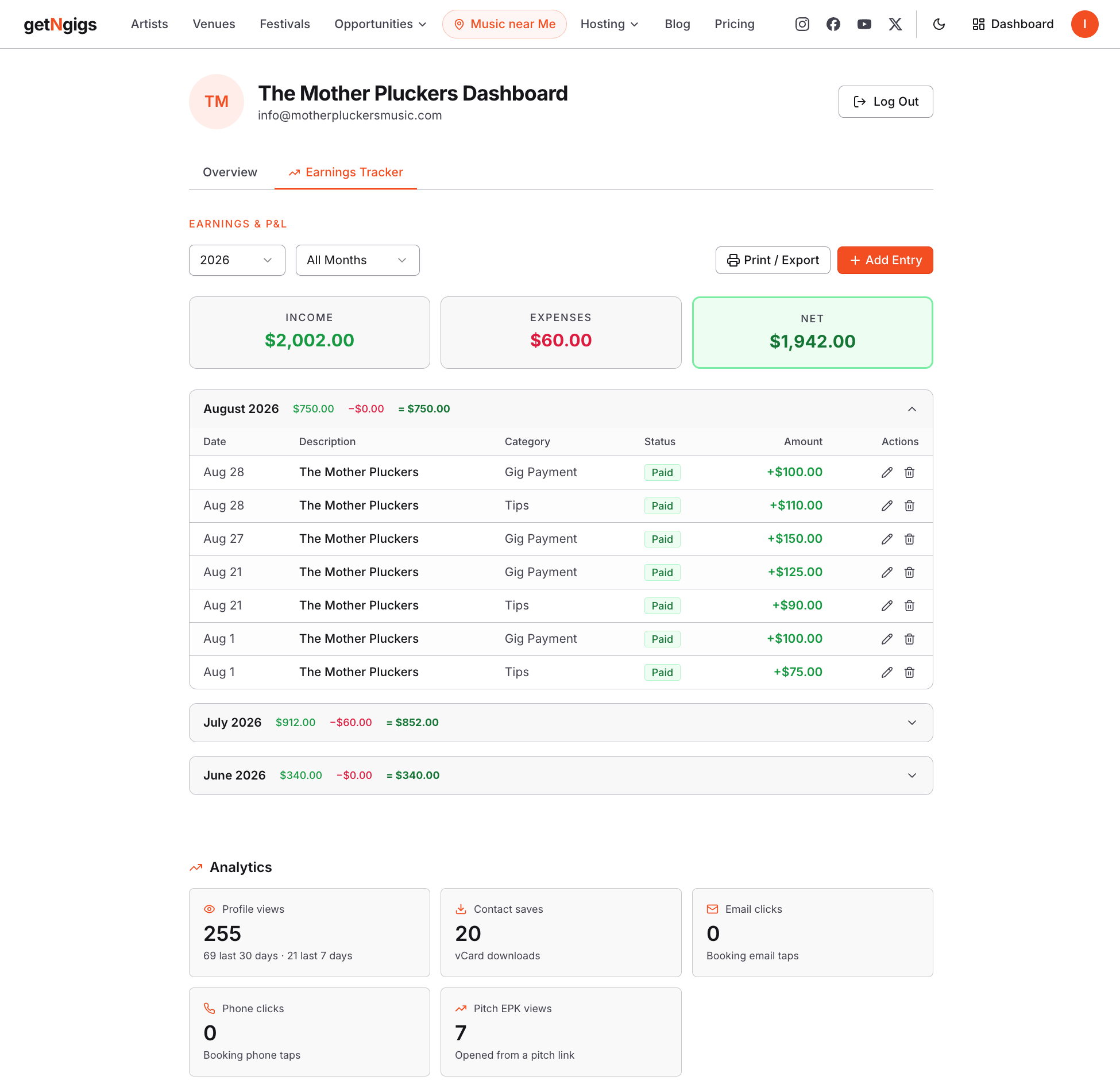
The getNgigs Earnings Tracker: log income and expenses, view a basic P&L, and export your records anytime.
None of these seven replace being good, and none of them work if you're only doing one. The musicians who make small gigs into a living aren't always the most talented person in the room, they're the ones who built five or six small income streams that all lean on the same skill set, so a slow month in one doesn't sink the whole thing. That's the real answer to "is it possible." It's possible, and it's built, not found.